



Simple Irrigation Methods for Small Farms
Four systems you can build on an acre or less, what each costs, and how to work out which one your water source can actually run.

In this guide:
- Work out what the crop needs
- Bucket and watering can
- Drip irrigation
- Furrow irrigation
- Sprinkler and hose
- Making any system go further
- What to build first
Start with the water, not the system
Every irrigation decision follows from one number: how many litres per hour your source can reliably deliver in the dry season. Choose the system first and you will build something your water cannot run.
Measure it before you spend anything. For a stream or a tap, time how long it takes to fill a 20-litre jerrycan and work back. For a well or a borehole, measure at the end of the dry season, not after rain.
1. Work out what the crop needs
A rough planning figure for most vegetable crops is 4 to 6 millimetres of water per day, which is 4 to 6 litres per square metre.
- Measure the plot you intend to irrigate, in square metres
- Multiply by 5 litres to get a daily requirement
- Divide by your source's hourly yield to get hours of pumping or carrying per day
- If that number is more than a few hours, either the plot is too big or the source is too small
Doing this arithmetic before buying anything is the single most useful hour in this article.
2. Bucket and watering can
Not a joke, and not a placeholder for a real system. For a plot up to about an eighth of an acre with a nearby source, it is the cheapest working irrigation there is.
- Cost — a few cans
- Water use — efficient, because you place water at the plant
- Labour — high, and it is the limiting factor
- Best for — nursery beds, kitchen gardens, high-value vegetables on a small area
Improve it by watering into a shallow basin at the base of each plant rather than broadcasting, and by watering early morning or evening.
3. Drip irrigation
The most water-efficient system available at small scale, and the one worth stretching for if your source is limited.
- How it works — a tank raised a metre or two feeds a header line, which feeds drip tapes running along each bed. Gravity does the rest
- Cost — a tank, a filter, mainline pipe and drip tape per bed. Moderate, and it lasts several seasons
- Water use — the lowest of any system, by a wide margin
- Labour — very low once installed
- Best for — vegetables in rows, tomatoes, onions, peppers
The filter is not optional. Silt blocks emitters, and a blocked line is invisible until the crop tells you.
4. Furrow irrigation
Water runs down channels between ridges and soaks sideways into the root zone. The oldest method here, and still the right one in the right conditions.
- Cost — labour to shape the ridges, and nothing else
- Water use — higher than drip, because of runoff and evaporation
- Requires — a reasonably level plot with a gentle, consistent slope, and a source that can deliver a lot of water quickly
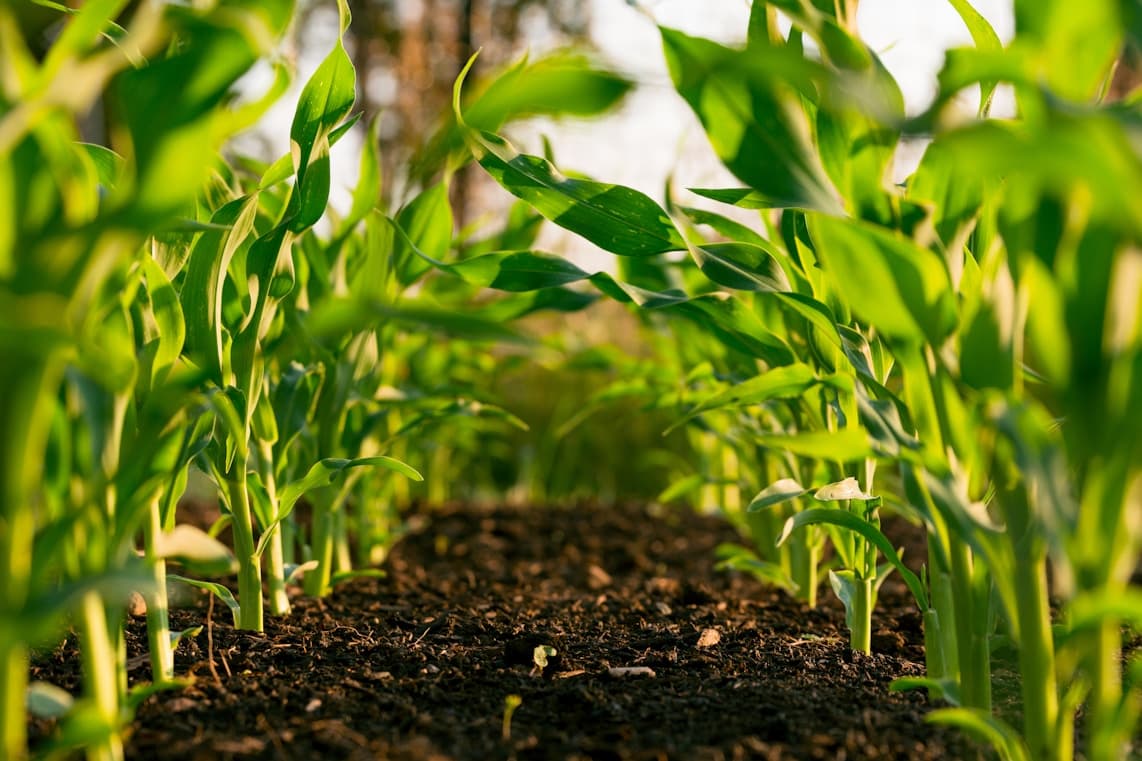
- Best for — maize, sugarcane, bananas, and any row crop on suitable ground
Short furrows outperform long ones. If the far end is waterlogged and the near end is dry, the furrow is too long.
5. Sprinkler and hose
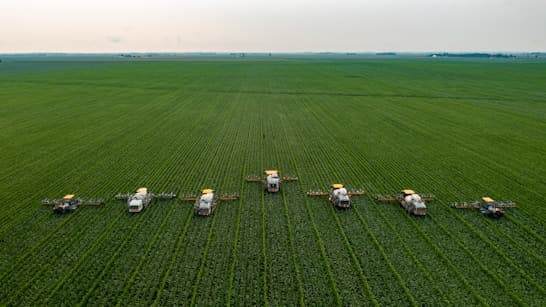
A pump feeding sprinklers or a hose. Flexible, fast to set up, and the least efficient of the four.
- Cost — a pump is the main expense, plus fuel or electricity to run it
- Water use — high; a lot evaporates before it lands
- Best for — larger areas, uneven ground, and crops that tolerate wet leaves
- Avoid for — tomatoes and other crops where wet foliage invites disease
Note: If you buy a pump, size it to the source, not to the plot. A pump that outpaces the well runs dry, and running dry destroys a pump quickly.
6. Making any system go further
- Mulch. A layer of dry grass or crop residue cuts evaporation substantially, and it is free
- Water at the roots, not the leaves
- Irrigate early morning or late evening, never at midday
- Harvest rainwater from every roof you have into a tank, and use it first
- Shade the tank — algae in a clear tank blocks drip emitters
What to build first
Measure your source. If it is small, build a raised tank and a gravity drip system for the highest-value beds, and mulch everything. If it is generous and your land is level, furrows cost almost nothing and work well. Add a pump only when the plot has outgrown what gravity can serve.